Quick answer: To stop doomscrolling, you need three things: friction at the moment of opening (so autopilot fails), a cost attached to scrolling (so it's a decision, not a default), and a replacement behavior that pays off (so quitting doesn't feel like pure loss). Blocking apps behind earned time — the FocusFirst model — provides all three in one mechanic.
Why you can't just stop
Doomscrolling runs on a loop psychologists call variable reward: most swipes give you nothing, occasionally one gives you something outrageous or fascinating, and the unpredictability itself is what hooks the brain — the same schedule slot machines use. Add a tired brain at 11pm, negative news that spikes vigilance, and an app that never ends, and "just put the phone down" is bringing willpower to a machine fight.
That's the reframe that matters: you're not weak; the environment is rigged. So change the environment.
Step 1: Make autopilot fail
Doomscrolling almost always starts with an unconscious open — thumb finds the app before you've decided anything. Any friction at that moment breaks the spell:
- Move the app off your home screen (small friction).
- Log out after each session (medium friction).
- Put a shield over the app so it simply doesn't open on a reflex tap (real friction). With FocusFirst, the shield shows your earned-time balance and asks a question autopilot can't answer: spend 5 minutes to unlock now?
Step 2: Attach a cost to the scroll
Free things get consumed mindlessly; priced things get considered. When scroll time must be earned — 10 minutes of focused time buying 3 minutes of feed — the 40 reflexive daily opens stop being worth it. You'll still scroll, but you'll notice you're doing it, and noticing is where the habit dies.
Step 3: Give the urge somewhere to go
Restriction without replacement is willpower theater — the urge remains and eventually wins. The earned-time model turns the urge itself into fuel: want to scroll? Fine — read ten pages, do a language lesson, finish the problem set, and the scroll is yours, guilt-free. In FocusFirst you choose which apps count as focus apps, so the "somewhere better" is whatever you're actually trying to build: study hours, a reading habit, a side project.
Step 4: Defend the danger hours
Doomscrolling clusters at two times: first thing in the morning and the last hour before sleep. A daily focus goal with a completion bonus gives your evening a finish line — hit the goal, take your earned time deliberately, and the "one more scroll" that used to eat the night has to come out of a visible balance instead.
What success actually looks like
Not zero social media. Success is: the app opens because you decided to open it; the session ends when the balance runs out instead of when your battery dies; and your week's focused hours — visible in FocusFirst's Progress tab — grow while the feed's share shrinks. No guilt. Just progress.
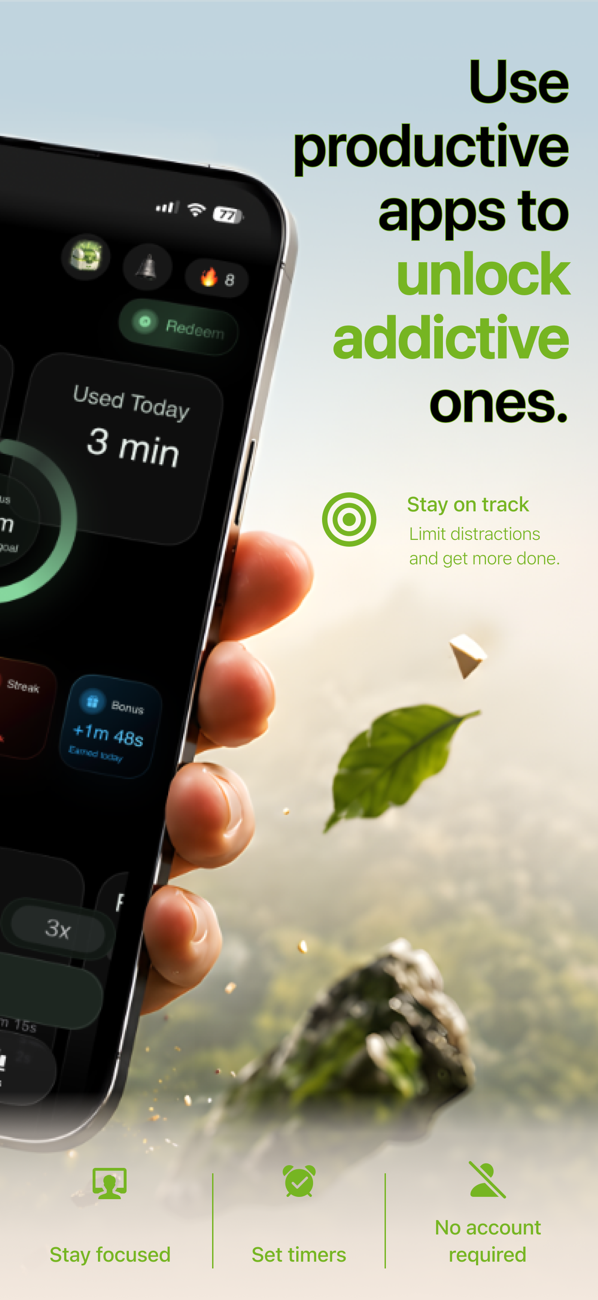
Try it: FocusFirst requires a subscription or one-time Lifetime purchase — block your distracting apps, set your earning rate, and start your first focus session today. Get FocusFirst for iPhone →